
A QA engineer evaluates whether software behaves as expected across real user workflows, technical integrations and different operating conditions.
Depending on the product, QA responsibilities can include:
The objective is not to test everything equally.
This keeps testing aligned with actual product risk.
A useful QA process asks:
| QA responsibility | Area |
|---|---|
| Identify unclear, incomplete or conflicting behavior | Requirements |
| Confirm features work as intended | Functional testing |
| Check that existing functionality still works after changes | Regression testing |
| Validate requests, responses, errors and business behavior | API testing |
| Verify connected systems work together correctly | Integration testing |
| Test important browsers, devices and environments | Compatibility testing |
| Evaluate behavior under relevant workload conditions | Performance testing |
| Validate security-sensitive workflows and controls | Security testing |
| Document issues clearly enough for developers to reproduce | Defect management |
| Confirm critical workflows before production release | Release validation |
Tell us what you are building, how releases work today and where quality problems are appearing.
QA expertise becomes particularly valuable when software complexity or release frequency makes informal developer testing insufficient.
Production defects may indicate gaps in:
Adding more testing at the end is not always enough.
The first step is understanding where defects are escaping and why.
Frequent releases create a recurring question:
Regression testing becomes increasingly important as the product grows because each new feature interacts with existing functionality.
QA engineers can help define which workflows need to be checked after different types of changes instead of repeatedly retesting the entire application without prioritization.
Products involving:
create many possible paths through the software.
Testing individual screens is not enough when the real business outcome depends on several steps working together.
A feature may appear correct in the interface while failing somewhere deeper in the workflow.
For example:
QA engineers can validate the complete journey, including failure scenarios between those systems.
For integration-heavy software, explore our API development expertise.
A major launch, migration or feature release may justify focused QA around:
The goal should be to identify release risk-not create the illusion that software can be proven completely defect-free.
Developers should test their own work, but the person implementing a feature naturally approaches it with knowledge of how it was built.
QA adds another perspective:
That perspective can complement developer testing rather than replace it.
Adding developers is not always the answer.
A common mistake is treating QA as the final stage:
A stronger process starts earlier.
Ambiguous requirements can become expensive defects.
Before implementation, questions might include:
Finding ambiguity in a requirement is usually cheaper than finding the same problem after implementation.
Acceptance criteria describe the behavior required for a feature to be considered complete.
For example, a password-reset requirement may need to cover:
Clear acceptance criteria make development and QA expectations easier to align.
QA does not need to wait until an entire product is finished.
Testing features as they become available can shorten the feedback loop:
rather than accumulating defects until the end of the release.
Pavans Group's broader development approach uses iterative development and incorporates testing and quality assurance before deployment.
Select a discipline to see what it covers.
Functional testing verifies whether the software behaves according to its intended requirements.
This can include:
Consider an eCommerce workflow:
Each screen might work independently while the complete transaction still fails.
QA should therefore validate both individual functionality and important end-to-end user journeys.
Positive testing asks:
Negative testing asks:
Examples include:
Both perspectives are necessary for reliable software.
Every software change introduces two questions:
and:
Regression testing focuses on the second question.
A minor text update and a change to authentication logic should not automatically trigger the same testing effort.
A stronger approach evaluates:
This keeps testing practical as applications grow.
Depending on the product, that may include:
These workflows often deserve repeated validation because failure would directly affect users or business operations.
Modern web and mobile applications depend heavily on APIs. API testing validates the behavior behind the interface rather than relying only on what appears on screen.
Testing can cover:
Pavans Group's documented QA process includes API testing as part of broader software quality assurance.
Confirming a normal request works does not demonstrate complete API reliability.
QA should also evaluate what happens with:
For API-heavy products, QA engineers and API developers should work closely around expected contracts and failure behavior.
Integration testing verifies whether connected components work correctly together.
A product might depend on:
or a wider workflow such as:
Each individual system may function correctly while the overall workflow fails because information is transferred incorrectly between them.
Common issues can include:
Integration QA focuses on the places where one system's assumptions meet another's.
Web applications need to work across the environments that matter to their users.
Testing may include:
Pavans Group's current software QA methodology includes cross-browser testing alongside functional and technical testing.
A feature working correctly in one browser does not guarantee identical behavior everywhere.
Testing should prioritize browsers and environments relevant to the product's actual users rather than trying to test every historical combination.
Mobile QA introduces additional variables because the product operates across different:
Pavans Group's mobile QA methodology currently covers functional testing, UI testing, API validation, performance, battery and data-use optimization, security and cross-device testing, including testing on physical mobile devices.
A mobile application may behave differently when:
These conditions can expose issues that are difficult to identify through ideal desktop-style testing.
Testing every device ever released is impractical.
A useful device-testing strategy should consider:
The goal is representative coverage based on real product usage.
Performance testing evaluates how software behaves under relevant workload conditions.
Depending on the product, this may involve:
Pavans Group includes performance and scalability testing within its documented software QA approach.
Testing an arbitrary number of users provides limited insight if that workload does not reflect the application.
Instead, define scenarios such as:
Then measure how the system responds.
A slow product can be caused by:
QA findings should help engineering teams identify where investigation is needed rather than assuming the visible layer is responsible.
Quality includes protecting functionality from incorrect or unauthorized use.
Security testing can examine areas such as:
Pavans Group includes security testing within its current software and mobile QA methodologies.
Removing an action from the interface does not prevent an unauthorized user from attempting the underlying request.
Security-sensitive permissions should be enforced at the appropriate backend and API layers.
QA can verify whether expected restrictions remain effective from the user's perspective.
Some defects occur even when the interface appears correct.
Database validation can help identify problems involving:
Pavans Group's documented QA process includes database testing for software applications.
Imagine an interface displays:
QA may still need to confirm that:
A visually successful screen does not always mean the complete transaction succeeded.
The strongest QA strategy does not automatically mean automating every test.
Manual QA can be valuable for:
A tester can notice unexpected behavior that a predefined automated script was never instructed to check.
Automation can be valuable where the same stable scenarios need to be validated repeatedly, particularly across frequent releases.
Potential candidates include:
Pavans Group's documented software QA methodology includes automated testing within its broader testing process.
Automation also requires maintenance.
If a feature is changing continuously, automated tests may need constant rewriting.
A useful question is:
Automation should create value-not become a vanity metric.
The terms can overlap, but the responsibilities are not identical.
| Primary focus | Role |
|---|---|
| Product quality, risk, testing and release confidence | QA engineer |
| Executing and evaluating software tests | Software tester |
| Implementing and maintaining software functionality | Developer |
| Building automated testing for repeatable scenarios | QA automation engineer |
| Software engineering focused heavily on test systems and automation | SDET |
A software tester may focus primarily on executing tests and identifying defects.
A QA engineer may contribute more broadly across:
Actual responsibilities depend on the product and team.
Developers are responsible for testing the software they build.
QA engineers add a different perspective around:
These roles should complement one another.
A QA automation engineer focuses more heavily on building and maintaining automated test coverage.
A broader QA role may combine manual testing, exploratory testing, release validation and automation according to the product's needs.
Consider a user registration feature.
The successful case may be:
QA should also consider:
The same principle applies to payments, bookings, reports, integrations and other important product workflows.
It is possible to imagine unlimited edge cases.
Good QA does not spend equal effort on every theoretical scenario.
Prioritize based on:
Severity describes how serious the defect is technically or functionally.
Priority describes how urgently the business needs it fixed.
Keeping these concepts separate supports better release decisions.
A bug report saying:
creates more questions than answers.
A useful defect report can include:
Testing results are only as useful as the environment in which they are produced.
Developers may perform initial testing while implementing a feature.
A separate environment can allow QA to evaluate integrated functionality before production.
Production should not become the primary environment for discovering preventable defects.
Some verification after deployment may still be necessary, but risky testing should happen earlier.
Testing only with:
may hide problems that appear with realistic data.
Relevant scenarios can include:
Test data should reflect the behavior being evaluated.
Products with several external dependencies create additional QA challenges.
For example:
Testing should consider what happens when:
A missing order might result from:
SaaS products can release changes frequently while existing customers continue depending on established functionality.
A change intended for one feature should not unexpectedly alter another customer's workflow.
QA priorities can therefore include:
For SaaS development requirements, explore SaaS developers.
For wider enterprise development needs, explore Enterprise software developers.
Enterprise applications often involve complex workflows spanning:
Testing should reflect those relationships.
A workflow may need to verify:
rather than validating each screen separately.
QA should not operate as a separate team waiting at the end of development.
QA can help identify:
Developers and QA engineers can align around:
QA validates:
A defect should be retested after correction.
Relevant regression coverage may also be needed to verify the fix did not affect connected functionality.
Quality assurance is part of Pavans Group's wider product-development process rather than a final visual check immediately before launch. The current development process includes testing for functionality, performance, usability and compatibility, while the company's Vadodara software methodology documents API, integration, security, performance, cross-browser, database and scalability testing.
The first step is understanding the team's current:
QA should integrate with the established engineering process for:
rather than creating an isolated testing process that developers cannot easily follow.
Teams should understand who is responsible for:
A dedicated development team can include QA engineers alongside software developers, designers, DevOps specialists and other roles when broader ongoing product capacity is required.
Every release has a finite amount of time.
Trying to test everything equally can mean the most important functionality receives too little attention.
Examples may include:
These areas normally deserve deeper validation.
Features used repeatedly by most customers deserve strong regression coverage because even a moderate problem can affect many users.
The areas modified during the release-and the functionality connected to them-usually deserve additional attention.
Minor cosmetic issues may still matter, but they should not necessarily receive the same release priority as failures affecting core transactions.
The objective is informed testing coverage rather than maximum test-case count.
A strong QA engineer needs more than the ability to follow predefined test steps.
Testing without understanding the product can become mechanical.
QA engineers should be able to ask:
These questions often reveal defects that straightforward happy-path testing misses.
The useful question is not:
It is:
Modern applications frequently require QA engineers to understand APIs even when their primary responsibility is user-facing testing.
The ability to evaluate request, response and error behavior makes debugging more effective.
A useful QA engineer should make a defect easier-not harder-for developers to investigate.
Ask whether the engineer considers what existing functionality could be affected by a new change.
Quality engineering is about relationships across the product, not only the latest feature.
A strong QA engineer should be able to explain why one workflow deserves deeper testing than another.
More test cases do not automatically mean better quality.
Pavans Group is headquartered in Vadodara, Gujarat, India and provides software-development services for startups, SMEs and enterprises across India and international markets. Quality assurance forms part of its current product-development process from software development through testing, deployment and ongoing improvement.
Evaluate whether the QA capability can understand:
The goal is not simply to find more defects.
It is to help the engineering team understand product risk earlier and release with better evidence.
There is no single meaningful QA engineer rate that applies to every software product.
The required testing scope depends on the application and the responsibility involved.
A simple website and a multi-role enterprise application require different QA depth.
Payments, logistics, CRM, ERP and other external systems introduce additional test scenarios.
Building and maintaining automated coverage requires different effort from primarily manual QA.
A product requiring broad browser or mobile-device coverage needs more testing effort than one operating in a controlled environment.
Products with business-critical performance or security requirements may require deeper specialist testing.
Testing requirements expand when a product spans:
An established application with:
may require initial discovery before an efficient QA strategy can be defined.
A better estimation sequence is:
rather than selecting QA support solely on hourly cost.
Pavans Group's published development process includes testing and quality assurance before deployment rather than positioning QA as an isolated activity after development.
Our documented QA coverage includes functional, API, integration, security, performance, cross-browser, database and scalability testing for software applications.
Pavans Group tests web applications as well as mobile products, with its current mobile methodology covering functional, UI, API, performance, security and cross-device scenarios.
QA engineers can form part of a wider development team alongside frontend, backend, mobile, UI/UX, DevOps and other specialists where the product requires multiple disciplines.
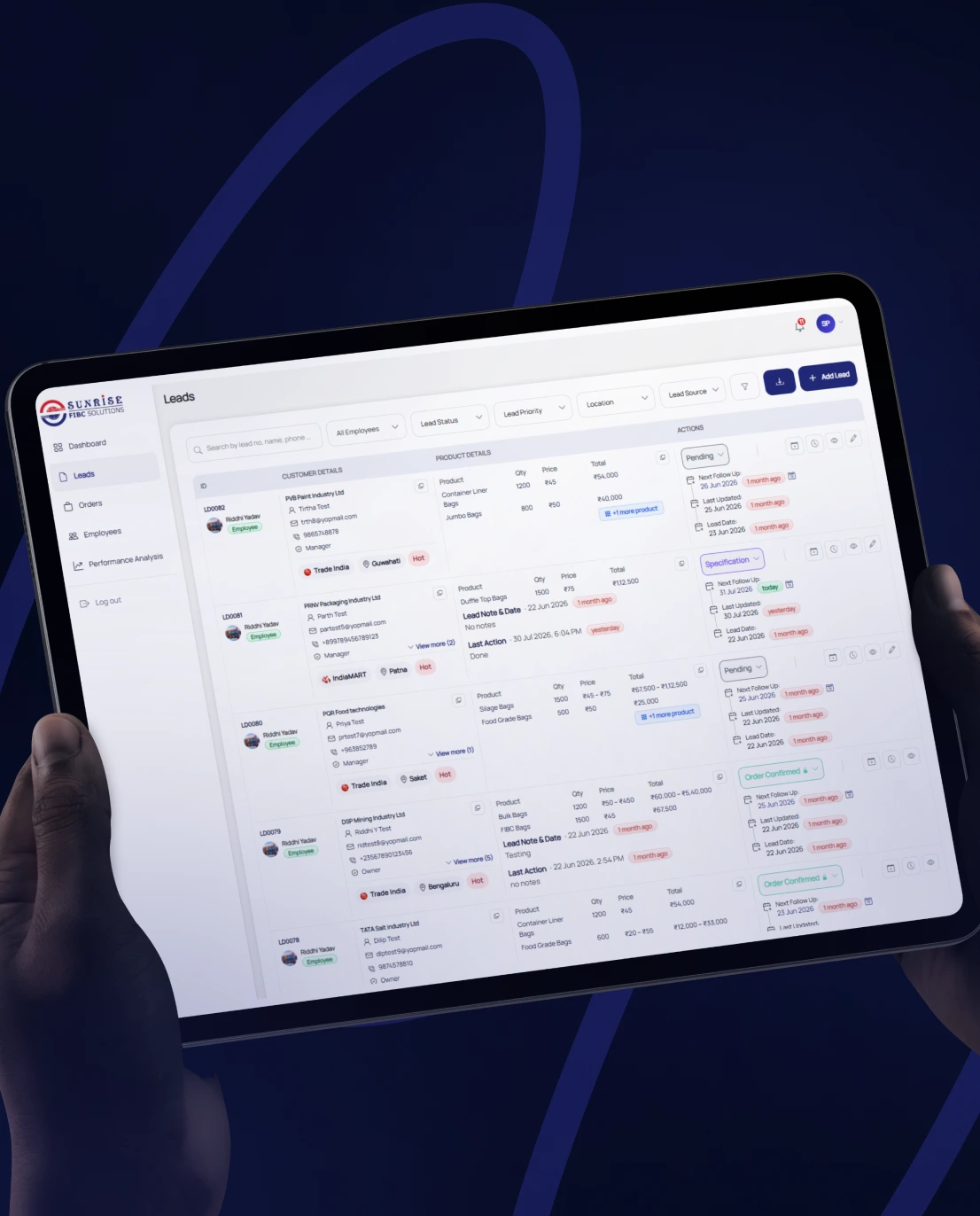
Projects such as Sunrise CRM provide direct evidence of functional, performance and security testing across software built around business workflows and operational data.
A QA engineer helps evaluate software quality by reviewing requirements, planning tests, validating functionality, identifying defects and checking important workflows before release.
Depending on the product, the role may involve functional, regression, API, integration, compatibility, performance and other forms of testing.
Software testing focuses on evaluating the software and finding problems.
Quality assurance can be broader, covering the processes used to prevent, detect and manage quality problems throughout development.
In practice, the terms often overlap across software teams.
Yes. Functional testing is part of Pavans Group's documented QA methodology across software and mobile application development.
Yes. API testing is included within Pavans Group's current software quality-assurance methodology.
Yes.
Integration testing can validate whether applications exchange data and status correctly with payment providers, CRM platforms, ERP systems, logistics services and other external applications.
The exact coverage depends on the available testing environments and third-party systems.
Yes.
Pavans Group's mobile QA methodology includes functional, UI, API, performance, security and cross-device testing and currently documents testing on physical mobile devices.
Yes. Cross-browser testing is included within Pavans Group's documented software QA approach.
The appropriate browser matrix should be based on the application's users and business requirements.
Regression testing checks whether software that previously worked has been affected by a new change.
It is particularly important for established products where each release may interact with existing functionality.
Yes, suitable repetitive scenarios can be automated.
However, not every test should be automated. Automation is most useful where repeated execution, stability and maintenance effort justify it, while exploratory or rapidly changing functionality may benefit from manual testing.
Yes.
QA engineers can work alongside existing development teams when access to requirements, builds, environments, issue tracking and release processes is clearly established.
Pavans Group's dedicated-team model can include QA engineers as part of a wider product team.
No.
QA can contribute earlier by reviewing requirements, identifying edge cases and defining test coverage before features reach final release.
Earlier feedback can reduce the cost of discovering requirement or workflow problems late in development.
Regression testing verifies that previously working functionality continues to work after software changes.
The regression scope should be based on what changed, which components are connected to it and how serious a failure would be.
Integration testing verifies whether two or more software components or external systems work correctly together.
Examples include testing communication between an application and payment provider, CRM, ERP, database or third-party API.
Performance testing evaluates how software behaves under relevant levels of usage or workload.
It can help identify bottlenecks involving APIs, databases, application logic, integrations or infrastructure.
Pavans Group includes performance and scalability testing within its current software QA methodology.
Severity describes how significantly a defect affects the software.
Priority describes how urgently the defect needs to be addressed from a business or release perspective.
A defect can therefore have high severity without being the immediate release priority, or low technical severity but high business priority.
QA cost depends on the product, platforms, testing scope, integrations, browser/device coverage, release frequency, automation needs and specialist testing requirements.
The appropriate estimate should follow the testing responsibility rather than applying one generic rate to every project.
There is no universal developer-to-QA ratio that works for every team.
The requirement depends on factors such as:
The right QA capacity should follow the product rather than a fixed staffing formula.
Yes. Pavans Group is headquartered in Vadodara, Gujarat, India and works with businesses across India and international markets.
Useful information includes:
You do not need a complete testing specification simply to begin discussing the requirement.
Software quality does not come from trying to find every possible defect immediately before launch.
It comes from combining:
around the workflows that matter most to users and the business.
A good QA engineer does more than report that something is broken.
They help the development team understand what could break, why it matters, what needs to be tested and what evidence is needed before a release moves forward.
Whether you need QA support for a new application, an existing SaaS platform, mobile product, API-heavy system or enterprise application, Pavans Group can help align testing with the real risks in your software.
Tell us what you are building, how your team releases software today and where you need stronger quality coverage.