Hire Enterprise Software Developers In India

Build and evolve enterprise software around complex workflows, users, data and existing business systems.

Pavans Group provides enterprise software development expertise from Vadodara, Gujarat, India for organizations building operational platforms, internal business applications, customer and partner portals, workflow systems, mobile applications and integration-heavy software.

Enterprise development is rarely about one isolated feature. A change may affect departments, permissions, databases, APIs, mobile users, reporting, integrations and existing business processes at the same time.

Whether you are building a new enterprise platform, extending an existing system or modernizing older software, the objective is to create technology that fits the organization without making future change unnecessarily difficult.


Tell us what you're building.

By submitting you agree to our Privacy Policy.

What does an enterprise software developer do?

An enterprise software developer builds and maintains applications designed to support important organizational processes, users and systems.

The work can involve:

Enterprise web applicationsInternal business platformsOperational softwareWorkflow automationCustomer and partner portalsRole-based systemsMobile workforce applicationsAPIs and integrationsReporting platformsERP and CRM integrationsDatabase-intensive applicationsLegacy modernizationCloud-based enterprise systemsPerformance optimizationSecurity and access controls

Enterprise developers need to understand both the software and the organizational environment around it.

A typical enterprise workflow may involve:

User → role → business process → approval → database → external system → reporting → audit trail

Changing one part of that flow can affect several others.

Enterprise development is more than building a large application

An application does not become enterprise software simply because it has many screens or users.

Enterprise complexity usually comes from relationships between:

People + processes + permissions + systems + data + integrations + operational risk

A useful enterprise solution needs to account for those relationships throughout its architecture.

Need developers for a complex business platform?

Tell us what systems already exist, which users are involved and what needs to improve.

When should you hire enterprise software developers?

Enterprise development expertise becomes particularly valuable when the application affects multiple teams, systems or operational processes.

Your organization has complex workflows

Large organizations often have processes involving several stages and participants.

For example:

Request → review → approval → assignment → execution → verification → reporting

Each stage may involve different:

DepartmentsRolesPermissionsDataNotificationsBusiness rules

Enterprise software can bring those processes into a structured system while preserving the controls the organization needs.

Several business systems need to work together

An organization may already depend on:

ERPCRMAccounting softwareInventory systemsHR platformsCustomer portalsMobile applicationsReporting toolsIndustry-specific software

Enterprise development does not always mean replacing these systems.

Sometimes the better solution is connecting them through APIs and purpose-built applications so information can move through the organization more effectively.

Your internal software no longer supports the business well

Software that originally served a smaller organization may become difficult as operations grow.

Common symptoms include:

Manual workaroundsDuplicate data entrySlow processesLimited reportingPoor integrationsDifficult permissionsIncreasing maintenancePerformance problemsOutdated interfaces

Enterprise developers can assess whether the best response is extension, integration, modernization or replacement.

You need software for distributed teams or field operations

Enterprise users do not always work from office desktops.

Operational platforms may need to support:

Field employeesManagersVendorsCustomersRemote locationsMobile devicesIntermittent connectivity

This can introduce requirements around offline operation, synchronization, permissions and cross-platform workflows.

Your organization needs more engineering capacity

An enterprise may already have:

Internal engineeringIT teamsProduct managersArchitectsBusiness analystsExisting vendors

but require additional development capacity for a defined platform, modernization programme, integration initiative or application roadmap.

External developers should integrate into the existing engineering environment rather than create a separate technical island.

When is enterprise software development not the right starting point?

Not every requirement needs enterprise-scale architecture.

The requirement is small and self-contained

A focused application for a limited workflow may be better approached as custom software without introducing unnecessary enterprise complexity.

An existing platform already solves the problem well

If your ERP, CRM or industry platform already supports the required workflow effectively, configuration or integration may create more value than replacing it.

Build custom enterprise software when there is a meaningful business gap.

The process itself is not defined

Software cannot resolve organizational uncertainty automatically.

If departments disagree about:

OwnershipApproval rulesDataResponsibilitiesProcess stages

those decisions should be clarified before they are embedded into software.

The actual problem belongs to one specialist layer

If the main constraint is specifically:

Frontend architectureBackend performanceAPIsCloud infrastructureMobile development

a focused specialist may be more appropriate than a broad enterprise-software role.

Choose the capability around the problem.

Enterprise software should model how the organization actually works

Many enterprise applications fail because they represent screens without accurately representing the business.

Before architecture decisions begin, understand:

Who performs the work?
What information do they need?
Which actions require approval?
Which system owns the data?
What happens when the normal process changes?

Design for exceptions as well as normal workflows

Enterprise processes rarely follow the perfect path every time.

The application may need to handle:

Approval rejected
Employee unavailable
External system offline
Incorrect data submitted
Process reopened
Customer changes requirement
Transaction partially completed

Exception handling should be part of the workflow design rather than an afterthought.

Map the business process

Start with the real workflow rather than the desired software interface.

For example:

Customer request → internal review → task assignment → field activity → customer confirmation → manager approval → reporting

Once the process is visible, developers can identify where technology should:

AutomateValidateNotifyIntegrateRecordReport

Define ownership at every stage

Enterprise workflows often cross department boundaries.

Clarify who can:

CreateReviewApproveRejectReassignModifyExportClose

a record before those permissions become embedded inconsistently throughout the application.

Enterprise roles and permissions need
deliberate architecture

Enterprise software may serve many types of users.

Examples can include:

  1. 01Super administrators
  2. 02Department administrators
  3. 03Managers
  4. 04Employees
  5. 05Field staff
  6. 06Vendors
  7. 07Partners
  8. 08Customers
  9. 09Read-only users
  • Authentication and authorization solve different problems

    Authentication determines who the user is.

    Authorization determines what that user can do.

    A logged-in employee should not automatically have access to every:

    DepartmentCustomerSiteDocumentReportAdministrative function

    Permissions should follow actual organizational responsibilities.

  • Role-based access can extend beyond simple job titles

    A user may have permission based on:

    RoleLocationDepartmentProjectCustomerBusiness unitRecord ownershipWorkflow stage

    Enterprise access design should account for these relationships without making administration unnecessarily difficult.

  • Administrative access also needs controls

    Internal administration tools may provide powerful capabilities.

    They should be designed with the same attention to access, accountability and usability as the customer-facing parts of the application.

Enterprise integrations should connect systems without creating new silos

Most enterprise environments already contain important software.

A new application may need to connect with systems such as:

ERP → CRM → operations → payments → inventory → reporting

Pavans Group develops APIs and integration layers for products where several applications need to exchange information reliably.

Integration design should account for failures

Enterprise integrations need to consider:

External downtimeTimeoutsDuplicate eventsDelayed synchronizationInvalid dataAuthentication failuresPartial transactions

A successful API call during development does not prove the complete business workflow will remain reliable in production.

Integration begins with identifying the source of truth

When two systems contain the same information, establish which one owns it.

For example:

If customer details exist in both a CRM and operational platform, which system is authoritative?

Without that decision, synchronization can automate conflicting information.
Not every system should be replaced

A stable enterprise application may continue performing its core responsibility effectively.

A new integration layer, portal or workflow application may solve the business problem without the disruption of replacing the underlying system.

Enterprise software modernization

Legacy applications can remain valuable long after their technology becomes difficult to maintain.

They may contain years of:

Business rulesIntegrationsDataProcessesUser knowledge

Replacing them without understanding those dependencies can create substantial risk.

Modernization does not automatically mean rewriting everything

Enterprise modernization can involve:

Frontend redevelopmentAPI developmentIntegration improvementsBackend refactoringDatabase optimizationFramework upgradesCloud migrationMobile applicationsPerformance improvementsSecurity enhancements

The correct approach depends on where the existing system is creating business or technical constraints.

Map dependencies before changing architecture

An old application may still support:

Scheduled jobsReportsExternal integrationsMobile applicationsPartner systemsData exports

Understanding those dependencies is essential before replacing components.

Modernize in stages where practical

Incremental modernization can reduce operational risk.

A programme might move through:

existing application → API layer → new module → redesigned interface → infrastructure improvement

rather than requiring every part of the system to change at once.

Real enterprise platforms developed by Pavans Group

Pavans Group's portfolio includes software designed around complex operational workflows, multi-role access, mobile workforces and integration-heavy business processes.

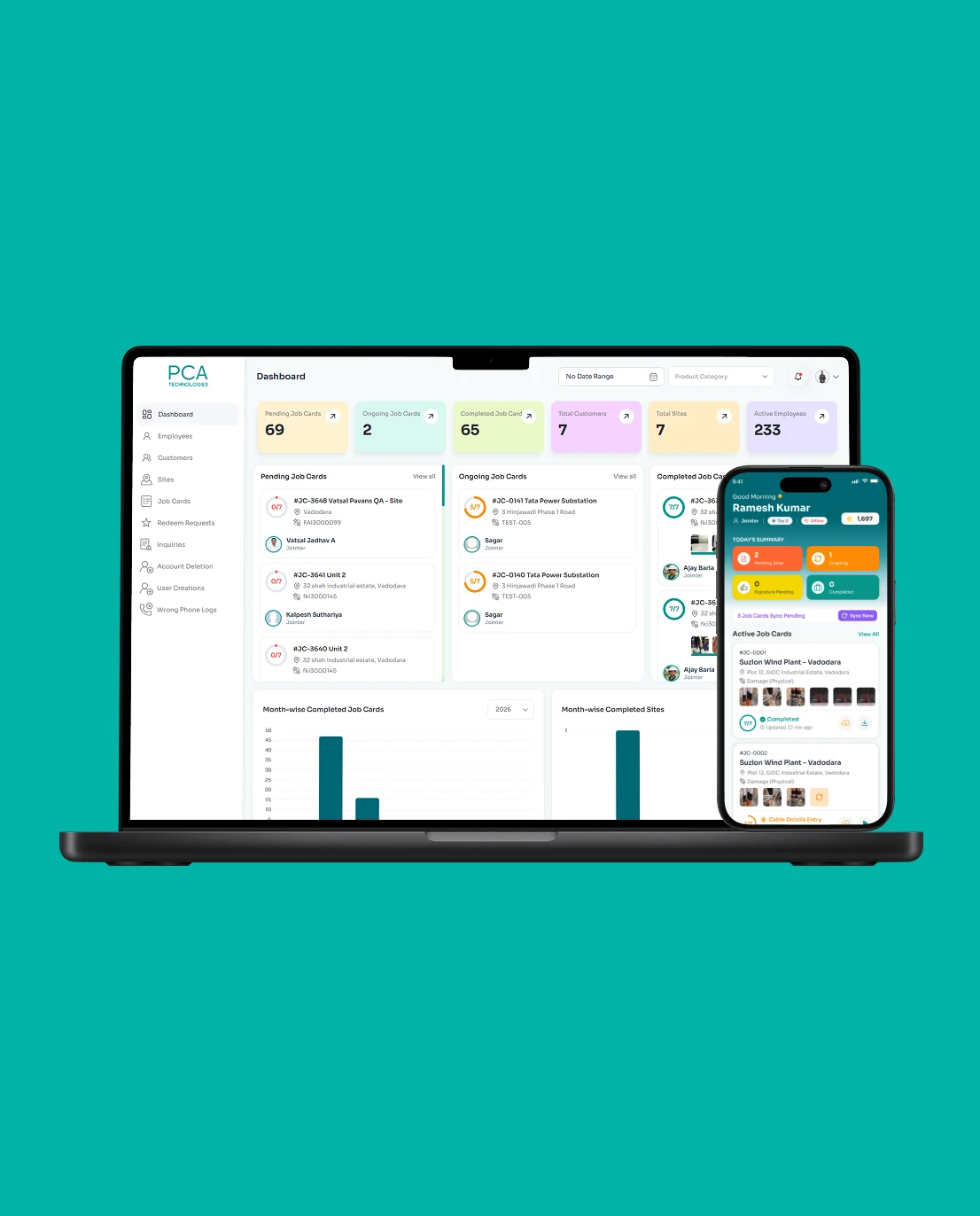
PCA Technologies product screenshot

PCA Technologies - enterprise field operations system

PCA Technologies required a connected platform for managing sites, employees, third-party jointers, customers, job cards and field operations.

Pavans Group developed a web administration platform and mobile applications around workflows including:

  • Site management
  • Employee management
  • Jointer management
  • Customer management
  • Job cards
  • Operational dashboards
  • Reporting
  • PDF generation
  • Excel exports
  • Role-based access
  • Offline field workflows

Why PCA demonstrates enterprise workflow development

The platform connects office and field responsibilities through one operational lifecycle:

PCA workflow: site,assignment,field activity,job card,customer confirmation, manager approval,reporting

Instead of digitizing isolated forms, the software connects the process across different user roles.

Explore the PCA case study

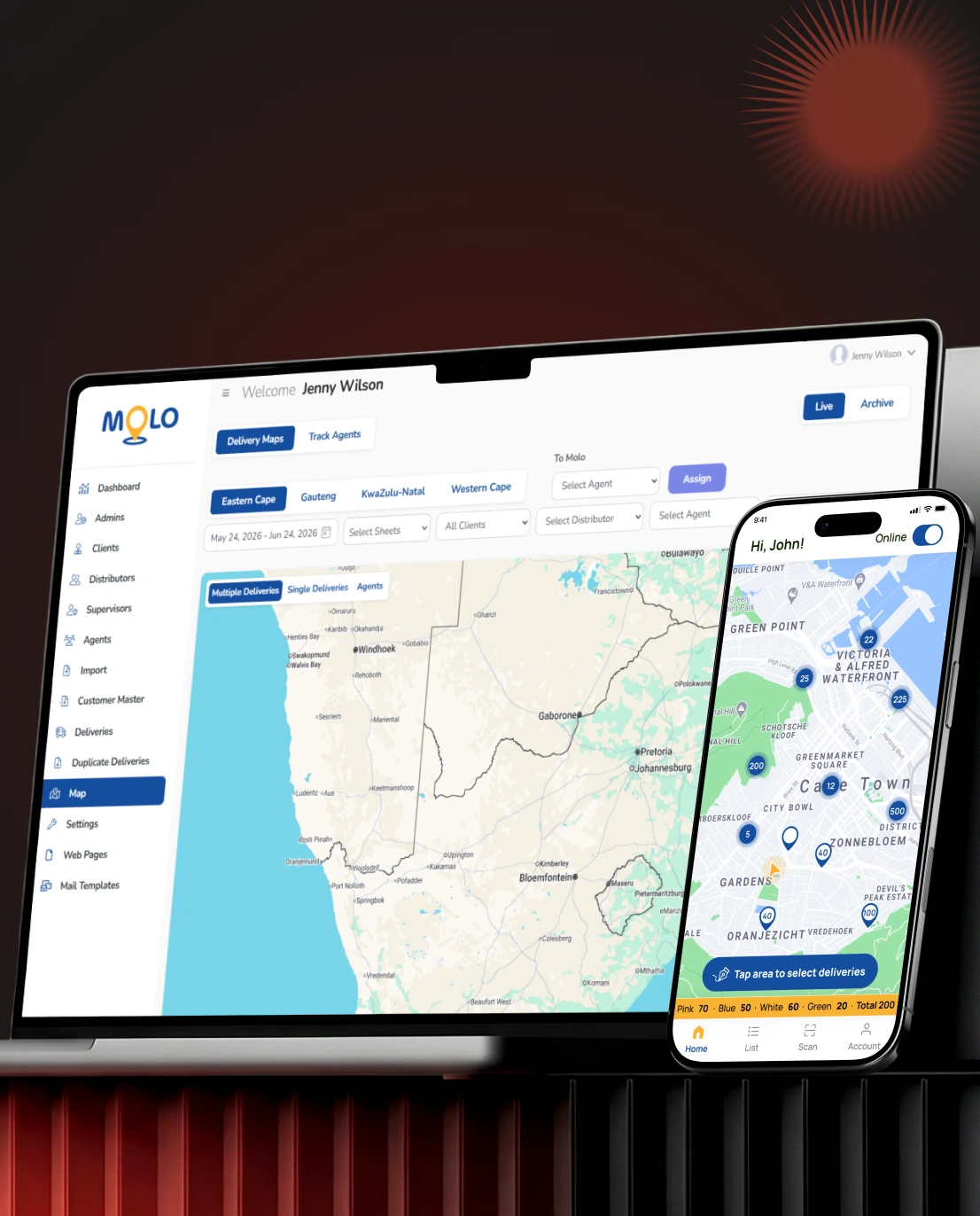
Molo product screenshot

Molo - large-scale last-mile delivery operations

Molo combines a mobile application for delivery agents with a centralized management portal for last-mile delivery operations.

The platform supports workflows involving:

  • Parcel management
  • Delivery agents
  • Route planning
  • Tracking
  • Offline operation
  • Proof of delivery
  • Payments
  • Management reporting

Why Molo is relevant to enterprise software

Field operations introduce technical requirements that office-based systems may not face.

Connectivity can disappear.

Agents need mobile workflows.

Managers need centralized visibility.

Operational records must still remain consistent across the system.

This combination of field applications and centralized management is a common enterprise-software challenge.

Explore the Molo case study

Building software around complex enterprise operations?

Tell us which teams, systems and processes need to work together.

What can enterprise software developers build?

Enterprise software can take different forms depending on what the organization needs to manage.

Enterprise web applications

Build browser-based platforms supporting:

Internal operationsAdministrationCustomersPartnersDataReportingApprovalsWorkflows

A web application can become the operational layer connecting several business functions.

Enterprise portals

Customer, employee, vendor and partner portals can provide secure access to specific information and workflows.

Users may be able to:

Submit requestsUpload documentsReview informationApprove actionsTrack progressAccess reportsManage account information

The portal should expose only the functionality appropriate to that user.

Workflow management systems

Enterprise workflow platforms can structure multi-stage processes such as:

submission → review → approval → assignment → execution → completion

while maintaining status, ownership and reporting throughout the process.

Field operations software

Organizations with employees working across sites may require:

Mobile applicationsOffline functionalityAssignmentsChecklistsPhotosSignaturesSite informationStatus updatesReporting

PCA, Molo and Liberty CORE demonstrate different forms of field-oriented software.

Enterprise reporting platforms

Reporting software can consolidate operational information into dashboards designed around actual management decisions.

A useful enterprise dashboard should help answer:

What is happening?
Where is attention required?
Which process is delayed?
What changed?
Who is responsible?

Integration and automation platforms

Enterprise developers can connect existing applications through:

APIsWebhooksData synchronizationScheduled processingWorkflow automation

The objective is to reduce unnecessary manual handoffs while preserving appropriate business controls.

Mobile enterprise applications

Enterprise mobile applications can support employees, field teams, partners or customers who need access away from a desktop environment.

Explore Pavans Group’s mobile app development services for enterprise products spanning web and mobile platforms.

Enterprise software development across
web and mobile

Complex organizations may require several interfaces around the same underlying platform.

For example:

01 Management web portal
02 Employee mobile app
03 Customer portal
04 Partner interface
05 Shared backend and APIs

These applications should not behave like unrelated products.

Centralize important business rules

Where practical, critical rules should live in shared backend systems instead of being implemented independently in every client application.

This can help maintain consistent behavior across:

WebMobileAdministrationIntegrations

Design each interface around its user

Sharing backend services does not mean every user needs the same interface.

A field technician and an operations manager may interact with the same underlying job record but require completely different workflows.

The application experience should reflect the responsibility of the user.

Enterprise applications need reliable
data architecture

Enterprise systems often become important sources of operational data.

Poor data structure can eventually affect:

ReportingSearchPerformanceIntegrationsAutomationAnalytics

Define core business entities

Identify important concepts such as:

CustomerEmployeeSiteProjectOrderAssetTransactionDocumentTask

and define how they relate to each other.

Avoid uncontrolled duplication

The same information should not be copied across several parts of the platform without a clear reason.

Duplication can create inconsistencies when one copy changes and another does not.

Plan reporting requirements early

If management needs reports by:

DepartmentLocationDateCustomerEmployeeStatus

the application needs to capture the appropriate data consistently from the beginning.

Enterprise APIs are contracts between important systems

Enterprise applications often depend heavily on APIs.

An API may connect:

Web applicationsMobile applicationsERPCRMCustomer systemsExternal providersInternal services

API development should therefore account for more than successful data transfer.

Enterprise APIs need predictable behavior

Consumers need clear expectations around:

AuthenticationPermissionsRequestsResponsesValidationErrorsVersioning

This becomes increasingly important when several teams or external systems depend on the same interface.

Backward compatibility matters

A backend change can break:

Mobile applicationsPartner integrationsCustomer systemsInternal services

Developers should understand existing API consumers before introducing breaking changes.

For integration-heavy requirements, Pavans Group also provides dedicated API development expertise.

Enterprise performance should be
measured across the complete system

Slow enterprise software can originate from several layers:

interface → API → application logic → database → integration → infrastructure

The visible symptom does not always identify the actual bottleneck.

Database performance

Enterprise applications can accumulate substantial operational data.

Query design, indexes, data relationships and reporting patterns can influence response times as usage increases.

Integration latency

An application may depend on an external service before completing a workflow.

In that case, optimizing the internal code may not remove the delay.

High-volume workflows

Imports, exports, reports and batch operations may require different processing strategies from normal interactive requests.

Measure before changing architecture

Identify:

where time is being spent

before deciding:

what architecture should change

Performance decisions should be based on evidence rather than assumptions.

Offline enterprise applications for
field teams

Enterprise software sometimes needs to operate where internet connectivity cannot be guaranteed.

PCA, Molo and Liberty CORE demonstrate different field-oriented workflows where mobile access and offline operation matter.

Offline capability is more than storing a screen locally

The application may need to decide:

What data is available offlineWhich actions can be completedWhere changes are storedWhen synchronization occursWhat happens when records conflictHow users understand synchronization status

These decisions should be considered as part of the application architecture.

Synchronization needs clear ownership

If both the server and offline device change the same information, the software needs a rule for deciding what happens when connectivity returns.

Offline workflows should not depend on silent assumptions.

Enterprise security should follow actual business risk

Enterprise applications may control operational processes and business-sensitive information.
Security needs to be considered throughout the application.

Role-based access

Users should receive the access required for their responsibilities.

Authentication

The application should verify users before allowing access to protected functionality.

Data access

Backend and API layers should enforce authorization rather than relying only on hidden interface elements.

Integration credentials

API keys, secrets and third-party credentials require appropriate handling and storage

Auditability

For important workflows, organizations may need visibility into:

Who performed an actionWhat ChangedWhen It ChangedWhich Process It Affected

The level of auditability should reflect the operational and compliance requirements of the system.

Enterprise software should support maintainability as well as functionality

An enterprise platform may remain in operation for many years.
Code that only solves today's requirement can become tomorrow's constraint.

Clear module boundaries

Related functionality should be organized around understandable responsibilities.

Reusable business logic

Important rules should not be duplicated across unrelated parts of the application.

Documentation

Critical architecture, APIs, integrations and deployment requirements should be understandable beyond the original development team.

Testing

Enterprise testing can include:

Functional testingAPI TestingIntegration TestingDatabase TestingPermission TestingPerformance TestingSecurity TestingCross-Device TestingRegression Testing

Testing priorities should reflect the impact of failure.

Enterprise developer vs other software
development roles

Primary focus Role
Complex organizational systems, workflows, integrations and long-lived applicationsEnterprise software developer
Software built around specific business requirementsCustom software developer
Continuous evolution of a digital productProduct developer
Software delivered as a recurring multi-customer serviceSaaS developer
APIs, databases and server-side systemsBackend developer
User-facing application layerFrontend developer
Integrations and communication between systemsAPI developer
Features spanning frontend and backendFull-stack developer

vs custom software developer

Enterprise software is often custom, but not every custom application is enterprise software.

Enterprise applications typically introduce greater complexity around:

Organizational rolesExisting SystemsIntegrationsDataScaleOperational ProcessesSoftware Lifecycle

Custom software may solve a much more focused business requirement.

vs SaaS developer

Enterprise software commonly serves organizational operations.

SaaS development focuses on software delivered as an ongoing product to multiple customers.

Enterprise SaaS can contain characteristics of both.

vs software architect

An enterprise developer implements and evolves application functionality.

Architecture responsibility focuses more heavily on system boundaries, technical decisions and relationships between major components.

Complex enterprise platforms may require both responsibilities.

vs full-stack developer

Full-stack describes technical coverage across frontend and backend.

Enterprise development describes the environment and responsibility.

A full-stack developer can work on an enterprise system, but larger enterprise platforms may require several specialist disciplines working together.

How Pavans Group approaches
enterprise software development

01 / 09

Understand the organization and operational problem

Begin with:

Business objectivesDepartmentsUsersExisting systemsWorkflowsCurrent constraintsRequired outcomes

Enterprise software should follow the organization rather than forcing every requirement into a predefined template.

02 / 09

Map users, roles and processes

Define:

user → responsibility → action → approval → data

before implementation.

This helps reduce permission and workflow problems later.

03 / 09

Assess existing systems

Understand:

ApplicationsDatabasesAPIsIntegrationsInfrastructureLegacy dependencies

before deciding what should be replaced.

04 / 09

Design the architecture

Architecture decisions can include:

Application boundariesAPIsDatabasesAuthenticationPermissionsIntegrationsInfrastructureReportingMobile requirements

The architecture should support the current requirement while leaving practical room for change.

05 / 09

Design workflows and interfaces

UI/UX work should reflect the different responsibilities of enterprise users.

Pavans Group’s UI/UX design services can support workflow design, information architecture, prototypes and production interfaces for complex applications.

06 / 09

Develop in manageable increments

Large enterprise software programmes benefit from reviewable development rather than one long implementation followed by a final reveal.

Incremental delivery allows business users and technical teams to identify incorrect assumptions earlier.

07 / 09

Test complete workflows

Enterprise testing should validate important end-to-end processes.

For example:

employee action → manager approval → system integration → report

rather than checking each screen independently.

08 / 09

Deploy and monitor

Production deployment should account for:

InfrastructureConfigurationDataIntegrationsMonitoringBackupsSupport
09 / 09

Continue improving the platform

Enterprise software evolves as:

Processes changeTeams expandNew systems are introducedRegulations changeTechnology changes

Maintainability should therefore be considered throughout development.

Working with your existing enterprise technology team

External developers should strengthen the existing engineering environment.

Understand the current architecture first

Before making major recommendations, review:

RepositoriesApplication StructureDatabasesIntegrationsAPIsInfrastructureDeploymentKnown Technical Debt

Define technical ownership

Clarify responsibility for:

ArchitectureModulesAPIsDataInfrastructureQAReleasesSupport

Ambiguous ownership can create operational gaps.

Follow one development workflow

Internal and external developers should align around appropriate processes for:

Source controlCode ReviewIssue TrackingTestingReleasesDocumentation

The objective is one maintainable enterprise platform.

Enterprise software development across different organizational needs

Technologies for enterprise software development

Enterprise technology selection should follow the application rather than forcing every organization into the same stack.

Pavans Group works across frontend, backend, mobile, databases, cloud, APIs and AI technologies used in modern business applications.

Frontend Technologies

Enterprise interfaces can use technologies such as:

React Vue.js Next.js JavaScript TypeScript

Backend Technologies

Backend systems can involve technologies such as:

Node.js Python Laravel PHP .NET APIs

Mobile Technologies

Enterprise mobile products can involve:

Flutter React Native Swift Kotlin

Database & Technologies

Application requirements may involve:

PostgreSQL MySQL MongoDB SQLite Redis

Liberty CORE provides a Pavans Group example of an enterprise platform built around Oracle for demanding operational workloads.

Cloud and infrastructure

Enterprise systems may use:

AWS Google Cloud Firebase Docker Kubernetes

Technology should be selected around security, deployment, performance, integrations and organizational requirements.

How much does it cost to hire enterprise software developers in India?

There is no useful single rate for every enterprise-software requirement.

Cost depends on the complexity and responsibility involved.

Required engineering disciplines

A programme involving frontend, backend, mobile, UI/UX, QA, database and cloud engineering needs a different team structure from a narrowly defined module.

A more useful estimation sequence is:

Organization → Workflow → Existing Systems → Technical Responsibility → Required Team → Development Scope → Estimate
01

Existing system complexity

Working inside a mature platform may require significant discovery before development begins.

02

Number of workflows

A focused internal application is different from software coordinating several departments and business processes.

03

Users and permissions

Complex organizational structures and permission rules add development and testing requirements.

04

Integrations

ERP, CRM, payment, logistics and other external platforms introduce additional architecture and failure scenarios.

05

Data requirements

Large datasets, reporting, migrations and complex relationships can affect the technical approach.

06

Web and mobile applications

A management portal combined with field applications requires a broader delivery structure than a single web application.

07

Offline requirements

Offline operation introduces synchronization and conflict-management requirements.

08

Modernization requirements

Legacy systems may need investigation, refactoring or staged migration before new functionality can be added safely.

Hire enterprise software developers in India from Pavans Group

Pavans Group is based in Vadodara, Gujarat, India and has been developing software and digital products since 2011. Our enterprise development work spans web applications, mobile products, backend systems, APIs, integrations, databases, UI/UX and modernization.

2011Established
VadodaraGujarat, India

For organizations evaluating enterprise software developers in India, geography should be only one part of the decision.

Also evaluate whether the development team can understand:

Existing softwareOrganizational workflowsUser rolesDataIntegrationsOperational riskLong-term maintainability

Enterprise software often remains part of an organization for years.

The development approach should therefore support both the immediate requirement and continued change.

Why consider Pavans Group for enterprise software development?

Experience with complex operational platforms

Liberty CORE, PCA and Molo demonstrate software involving multiple user groups, web and mobile applications, operational workflows, reporting and field environments.

Field and offline application experience

PCA, Liberty CORE and Molo provide practical examples of software built for employees working beyond conventional office environments.

India-based development with international product experience

Pavans Group operates from Vadodara, Gujarat, India and develops software for organizations in India and international markets.

Experience with existing and new software

Enterprise development can involve both greenfield applications and existing platforms requiring enhancement or modernization.

The first step should be understanding the current environment.

Development across the full application stack

Enterprise requirements can span:

UI/UXFrontendBackendMobileAPIsDatabasesCloudQA

Pavans Group can support these connected product disciplines rather than treating every layer as an unrelated project.

Frequently asked questions about hiring enterprise software developers

An enterprise software developer builds and maintains applications designed around complex organizational workflows, users, systems and data.

Responsibilities can include web applications, backend systems, APIs, integrations, databases, mobile applications, permissions, reporting and modernization.

Enterprise software is software designed to support important processes across an organization.

It may serve employees, managers, customers, partners or field teams and commonly integrates with other business systems.

Custom software is built around specific requirements.

Enterprise software is often custom but typically involves additional complexity around organizational structure, integrations, user roles, data, operational workflows and long-term maintenance.

Yes.

Enterprise applications can integrate with existing ERP, CRM and other business systems where suitable integration methods are available.

Replacing a working platform is not always necessary.

Yes.

Modernization can include interface redevelopment, API development, backend refactoring, database optimization, cloud changes, integrations or incremental replacement of older components.

The existing system should be assessed before deciding whether a complete rewrite is justified.

Yes.

A platform may include a management web application, employee mobile apps, customer portals and shared backend services.

The appropriate structure depends on each user's responsibilities.

Yes, where offline operation is designed into the product.

PCA, Molo and Liberty CORE provide examples of Pavans Group projects involving offline field workflows.

Offline systems require additional decisions around local data, synchronization and conflict handling.

Yes.

Enterprise software commonly requires APIs connecting web applications, mobile products, databases and external business systems.

Pavans Group develops REST, GraphQL and third-party integrations as part of broader software development.

Yes.

Enterprise applications often need access based on roles, departments, locations, projects or ownership.

Permissions should reflect actual business responsibilities rather than relying only on generic administrator and user roles.

Potentially.

Performance problems can originate from the frontend, APIs, application logic, database, external integrations or infrastructure.

The bottleneck should be measured before architecture changes are recommended.

Yes.

External developers can work alongside existing technical teams when ownership, repositories, architecture, development processes, QA and release responsibilities are clearly defined.

Pavans Group works across technologies including React, Next.js, Angular, Vue.js, Node.js, Python, .NET, PHP/Laravel, Oracle, PostgreSQL, MySQL, MongoDB, Redis, Flutter, native mobile technologies and cloud platforms.

The technology should follow the enterprise requirement rather than a fixed stack.

Cost depends on the application's complexity, existing systems, workflows, integrations, user roles, data, platforms, modernization needs and engineering responsibilities.

A requirement-based estimate is more useful than applying one generic enterprise developer rate.

The timeline depends on scope, existing systems, workflows, integrations, data migration, platforms and organizational dependencies.

A focused enterprise module requires a different timeline from a multi-platform modernization programme spanning several departments.

Yes. Pavans Group is headquartered in Vadodara, Gujarat, India and has been developing software and digital products since 2011.

Yes.

Pavans Group works on software products for organizations in India and international markets.

The delivery structure, responsibilities and collaboration model should be defined around the particular programme.

Useful information includes:

  • Business problem
  • Existing applications
  • Current workflows
  • User groups
  • Departments involved
  • Required integrations
  • Data sources
  • Existing architecture
  • Mobile requirements
  • Reporting requirements
  • Known technical constraints
  • Modernization priorities
  • Target outcomes

You do not need a complete technical specification simply to begin the discussion.

Build enterprise software around the
organization-not around isolated features

Enterprise applications create the most value when technology connects the people, processes, data and systems required to operate the business.

Start by understanding:

Who performs the work.How the workflow moves through the organization.Which systems already contain important data.Where approvals and permissions matter.Which processes create delays or manual work.What must remain reliable as the organization changes.

Then design the software around those realities.

Whether you are building a new enterprise platform, extending an existing system, connecting business applications, supporting field teams or modernizing legacy software, Pavans Group can help turn complex organizational requirements into maintainable software.


Discuss your enterprise software requirements

Tell us which processes, teams and systems need to work together.